How To Check If A Download Link Is Safe
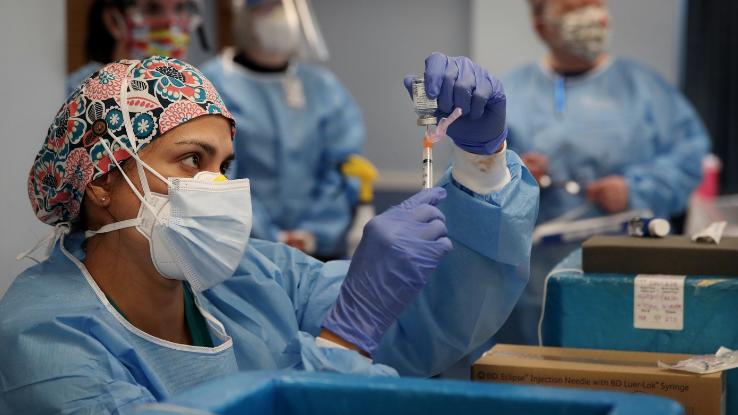
Over the course of 2020, the world'due south leading scientists and researchers worked tirelessly to engineer COVID-xix vaccines. And, heading into 2021, the U.S. Food and Drug Assistants (FDA) provided many Americans with much-needed hope after issuing Emergency Utilise Potency for both the Pfizer and Moderna vaccines. A third vaccine developed by Janssen — a Johnson & Johnson company — earned emergency utilize authorization from the FDA in late February 2021. Without a dubiety, the rapid evolution of these vaccines was an unprecedented achievement. But this sense of triumph (and relief) is often marred past conversations surrounding the vaccines' safety.
As reported in U.S. News & World Report, a 2020 Gallup survey found that 11% of adults in the U.Southward. believe vaccines are "more dangerous than the diseases they prevent." While this survey was conducted before the novel coronavirus pandemic made headlines in the U.S., it's undeniable that the vaccine rollout is happening among a climate of mistrust and misinformation. Even though the FDA has deemed the iii vaccines "safe and effective," and has fully approved the Pfizer vaccine as of August 2021, many Americans are still hesitant when information technology comes to vaccination. With this in mind, we're taking a look at some of the most common concerns when it comes to the COVID-19 vaccine in our latest Fact Check.
Editor's Note: Our research pertains to the Pfizer, Moderna, and Janssen (colloquially called Johnson & Johnson) COVID-19 vaccines just. We will update this data equally others are approved for use.
Does Getting Vaccinated Mean Life Tin can Render to "Normal"?
For over a year, many of u.s.a. take dreamed of a time when going maskless at the grocery store feels safe again. Unfortunately, what once seemed like a possibility — and what was deemed okay past the CDC in June 2021 — has changed yet over again in light of the surges in cases continued to the Delta variant.
Now, the CDC'south guidelines are more than closely aligned with those the World Wellness Organization (WHO) put forth toward the end of June 2021; leading experts at the WHO strongly urged fully vaccinated individuals to go on wearing masks in public — in part because of the increased business concern over the Delta variant.
Then, what has the CDC said? As of late July 2021, the CDC believes that "To maximize protection from the Delta variant and prevent possibly spreading information technology to others, wear a mask indoors in public if you lot are in an surface area of substantial or high transmission." The U.Southward. federal government — and many land and local officials across the state — seem to be following this new guidance from the CDC, especially in places that take been impacted by the Delta variant surges.
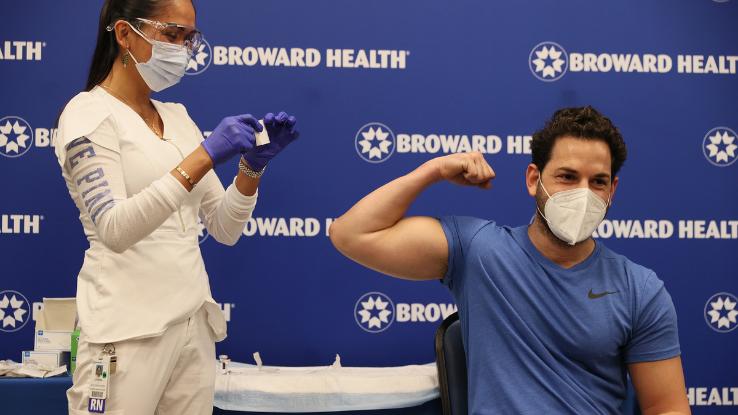
Information technology'south of import to note that this CDC guidance does not override state, local or tribal laws. Moreover, business owners and offices tin can still require mask usage, non just suggest information technology. Of grade, for many Americans, this mask-wearing guidance reversal from the CDC — which had previously said fully vaccinated individuals could become mask-less in public spaces — seemed inevitable. In a survey conducted by The New York Times in May 2021, hundreds of epidemiologists had anticipated that mask-wearing would remain the norm for at least another year.
And then, what can fully vaccinated individuals exercise? According to the CDC, the following is advised:
- Yous can resume activities that y'all did prior to the pandemic.
- If you travel in the United States, you lot do not demand to get tested before or after travel or self-quarantine after travel. It's worth noting that vaccine passports may touch this statement if they're mandated in the near hereafter.
- If you've been around someone who has COVID-19, you do not need to stay away from others or get tested unless you accept symptoms — unless you live or piece of work in a correctional or detention facility or a shelter for unhoused folks.
Editor's Annotation: To exist clear, individuals are considered fully vaccinated two weeks after their terminal shot.
Although in that location are quite a few different methods for developing vaccines, both the Pfizer and Moderna variations are made using the aforementioned engineering — a new technology, in fact, that utilizes mRNA. Retrieve back to loftier school biology for a moment: You lot might call back that DNA is the carrier of genetic information and that the similarly named mRNA (or messenger RNA) is essentially a ready of instructions that tells the body how to make certain proteins to fight and prevent disease.
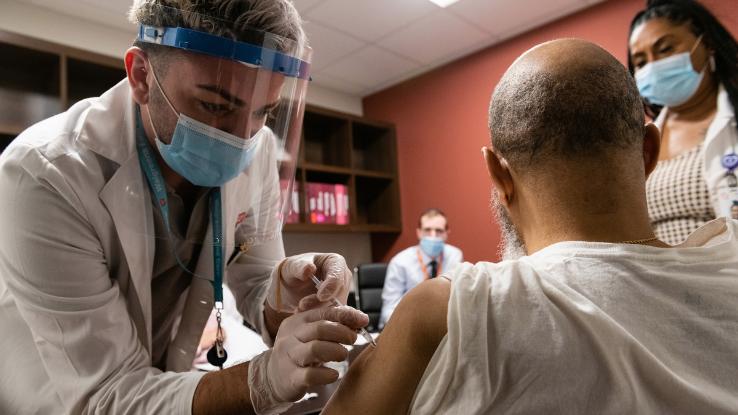
Once a recipient receives an mRNA vaccine, information technology tells their cells to create a viral protein that triggers an immune response. Unlike other vaccines, which use weakened or similar forms of a virus to trigger these responses, there is no live virus involved here, which means the vaccine tin't cause COVID-19 because it simply doesn't incorporate the novel coronavirus. Instead, the vaccine teaches our immune systems to recognize and fight the virus to protect us from future exposure.
Instead of using the mRNA method, the Johnson & Johnson conception modifies an existing adenovirus — something that normally causes colds — by inserting the novel coronavirus spike protein into it. While this modified adenovirus can't reproduce in the human body or crusade COVID-xix, it does help your trunk set up antibodies in advance, which means your allowed system volition be ready should you actually contract the novel coronavirus.
Are the COVID-19 Vaccines Safety?
Before a vaccine is deemed safe, information technology goes through what the Centers for Disease Control and Prevention (CDC) calls "rigorous" testing. Initially, rubber trials start in the lab, where experts run tests on (and research) cells and animals — and that'southward all before human studies are given the green calorie-free.
Additionally, CDC guidelines require that "vaccines pass through half-dozen full general stages of development: exploratory, pre-clinical, clinical, regulatory review and blessing, manufacturing, and quality command. …It'south not unusual for a vaccine to take 10 to xv years to complete all the phases under normal circumstances." Plain, these are not normal circumstances. Although speeding upwards the development process was necessary, leading experts, including Dr. Anthony Fauci, stated that attempts to fast-rail a vaccine should not supersede the fact that a vaccine must be both prophylactic and effective before distribution.
For instance, Pfizer ran its own tests and clinical trials that included more than than 44,000 adult participants, while Moderna ran a 30,000-person efficacy trial. After these trials and the FDA's own analysis, which found "no specific safe concerns," the vaccines were authorized for emergency use. Dr. Fauci has gone on record stating that he has "extreme conviction" in the safe of the approved vaccines and even received the Moderna vaccine on camera in late December 2020. The Pfizer vaccine specifically received full support from the FDA after satisfying the agency's strenuous testing and review processes in August 2021.
Is It Safety for Children to Receive the Vaccine?
When the vaccines initially rolled out, Pfizer'south vaccine had been approved for folks age xvi and upwards, while Moderna'southward had been approved for folks age 18 and up. For a while, that meant anyone younger was unable to seek vaccination — simply that all changed in May 2021.
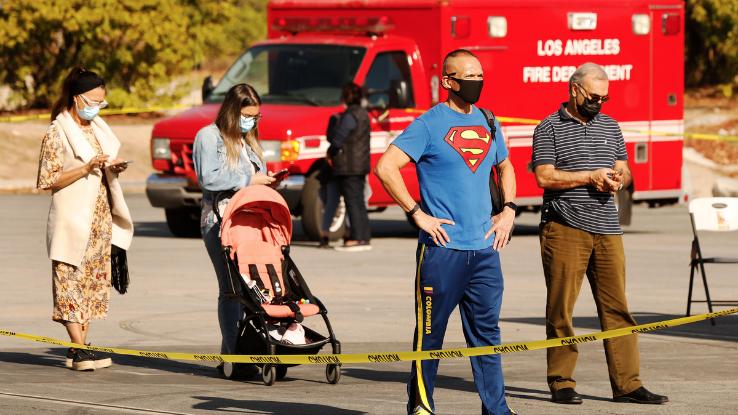
On May 10th, the FDA expanded the emergency use authorization of the Pfizer vaccine, so that adolescents 12-15 years of historic period can receive their shots. Ii days after, the CDC endorsed the FDA's argument. Earlier these expanded approvals, pediatric specialists, such every bit Connecticut Children's, reiterated that "young adults and kids aren't typically at loftier take a chance for severe disease from COVID-nineteen." Nonetheless, the CDC and FDA believed approving the Pfizer vaccine for younger individuals was an of import milestone.
"For vaccination to do its job, we must do our critical part. That means vaccinating every bit many people as possible who are eligible. This official CDC action opens vaccination to approximately 17 million adolescents in the U.s.a. and strengthens our nation's efforts to protect even more than people from the effects of COVID-19," the CDC statement noted. "Getting adolescents vaccinated means their faster render to social activities and tin provide parents and caregivers peace of heed knowing their family is protected."
Should Pregnant or Lactating Individuals Seek Vaccination?
The CDC strongly encourages meaning and lactating individuals to go inoculated. Through rigorous testing and research, the CDC has discovered that the benefits of COVID-xix vaccines "outweigh any known or potential risks of vaccination during pregnancy".
Furthermore, the CDC has institute no testify that COVID vaccines negatively bear upon fertility rates. Anyone who is 12 years of age or older can receive a vaccination shot – whether an individual is pregnant, breastfeeding, or expecting to get pregnant in the future.
Should Immunocompromised Individuals Seek Vaccination?
Immunocompromised persons are likewise encouraged to become vaccinated as soon as possible. In August 2021, Dr. Director Rochelle P. Walensky signed a recommendation that urges moderately to severely Immunocompromised individuals to become inoculated. Additionally, Dr. Walensky and the CDC encourage Immunocompromised people to receive booster shots to prevent serious COVID-19 cases.
In April, At that place Was a Pause on the Johnson & Johnson Vaccine — But Why?
Every bit for Johnson & Johnson vaccine, the CDC initially stated that it "has been shown to meet all requirements for Emergency Employ Authorization," thus making it another key role player in helping to prevent severe COVID-19 illness, hospitalization, and death. But on Apr xiii, 2021, the CDC and the FDA released a joint statement that recommended the U.S. pause its distribution of Johnson & Johnson vaccines.
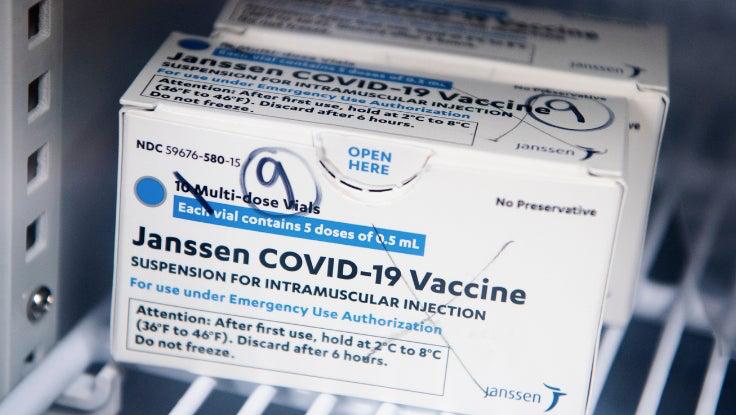
The now-revoked recommendation came in the wake of half dozen reports of a "rare and severe" blazon of claret clot that occurred in women betwixt the ages of 18 and 48. These six patients reported symptoms 6 to 13 days afterward receiving the Johnson & Johnson vaccine. The joint statement likewise noted that the adverse side effects were "extremely rare" — after all, half dozen.eight million doses of the Johnson & Johnson vaccine had been administered in the U.S. when the pause occurred.
By April 23, 2021, the CDC and FDA lifted the recommended intermission post-obit "a thorough safety review." Moreover, while the risk of developing a blood clot due to the vaccine remains incredibly depression, the two agencies have vowed to remain vigilant.
"Safety is our top priority. This pause was an example of our all-encompassing rubber monitoring working as they were designed to work—identifying even these small number of cases," said Janet Woodcock, Yard.D., Acting FDA Commissioner. "We are confident that this vaccine continues to see our standards for safety, effectiveness, and quality."
In the rare example you develop a "severe headache, abdominal pain, leg hurting, or shortness of breath inside three weeks after vaccination," or if you lot take whatever additional questions, the CDC and FDA recommend reaching out to your healthcare provider.
Does the Vaccine Take Any Side Furnishings?
No matter the vaccine — and no affair what a vaccine is fighting against — injection is often accompanied by mild side effects, including fatigue, swelling, pain, and redness at the injection site, all of which usually clear up within 24 hours. In fact, these types of side furnishings "testify that the vaccine is working, considering it stimulates the immune system and the trunk forms antibodies against the infection that is only 'feigned' past the vaccination."
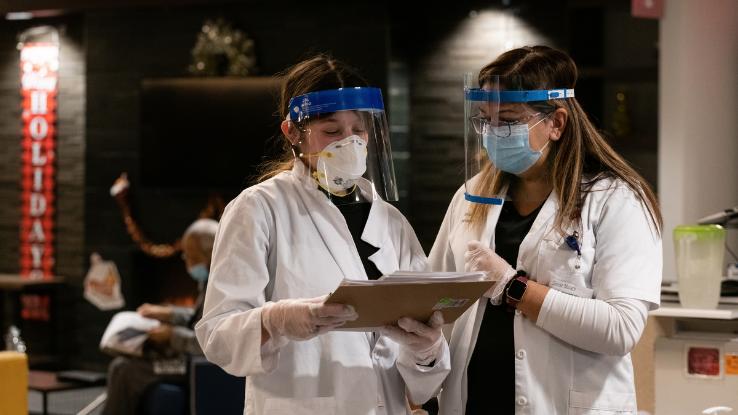
Recently, the Finnish Medicines Bureau (FIMEA) constitute that headaches, balmy fever, and joint hurting tin accompany the COVID-19 vaccines; in particular, incidences of fever take been plant to be higher after the 2nd dose of the Pfizer vaccine. Additionally, organizations like the CDC and FDA will continue to monitor vaccine safety to take hold of and accost emerging trends in adverse effects. As of now, even so, there's no prove to signal that the Pfizer and Moderna vaccines crusade whatever long-term or harmful side effects, and less than one% of Pfizer vaccine recipients had severe allergic reactions.
Is One Vaccine "Better" Than the Other?
People may have to choose a vaccine based on availability, prompting folks to wonder if i is ameliorate than the others. First, allow's compare the mRNA vaccines. While the Pfizer vaccine is authorized for individuals age 16 and older, the Moderna vaccine is authorized for individuals historic period 18 and older; Pfizer boasts a 96% efficacy rate across dissimilar racial, ethnic, gender, and age groups. Moderna also boasts a 96% efficacy charge per unit as of August 2021.
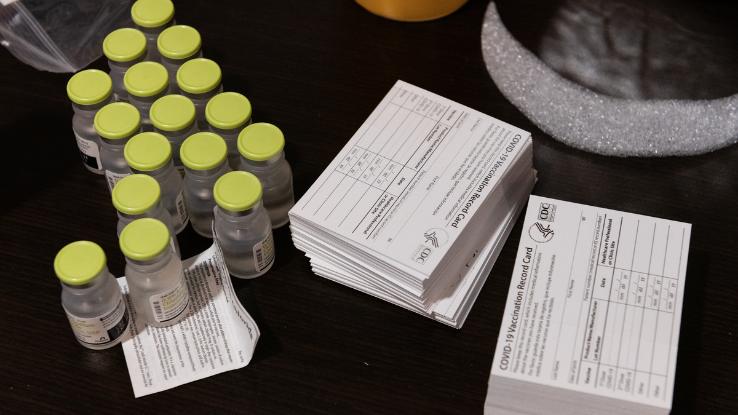
In terms of administering the vaccine, both require two rounds of doses: Pfizer vaccines require a 21-day interval between shots, whereas Moderna's require a 28-day interval. Although the Pfizer version contains 30 micrograms of the vaccine — compared to Moderna's 100 micrograms — it provides like efficacy results at a cost.
That is, co-ordinate to Stat, the Pfizer vaccine must be stored at -94 degrees Fahrenheit and, later on thawing, it must be administered inside 5 days. In this regard, Moderna's variation seems to have a slight edge: It should be shipped at a more manageable -four degrees Fahrenheit but tin be stable at fridge temperature for 30 days. All things considered, the two vaccines are quite comparable, and receiving immunization from either is a great step toward ending the devastation of the COVID-19 pandemic.
What About the Janssen (Johnson & Johnson) Vaccine?
While this third vaccine, which is authorized for individuals 18 and older, doesn't avowal the same efficacy rates as the Pfizer and Moderna formulations, it's still extremely effective. In the first 14 days after vaccination, the Janssen vaccine is roughly 74.4% constructive in preventing severe or disquisitional forms of COVID-19; after 28 days, that effectiveness jumps to most 84%. Does this sound low? Well, it'due south worth noting that the flu shot is oft effectually 60% effective.
With this in listen, the CDC has chosen the Janssen vaccine "another important tool in our toolbox to deservedly vaccinate as many people as possible" — and for good reason. Starting time and foremost, the Janssen vaccine is just ane dose, which ways patients don't need to make follow-upward appointments to receive the vaccine's full benefits. Additionally, the one-dose formulation doesn't need to exist kept in a freezer, which makes storing and transporting it less of a logistical nightmare.
The CDC states that the comparative ease of moving this vaccine "allows for expanded availability in nigh community settings and mobile sites, equally supply scales upward." Moreover, the Janssen vaccine possesses an 85% effectiveness rate against the Delta variant of COVID-xix.
Can You lot Still Contract or Spread COVID-19 After Getting Vaccinated?
Both the Pfizer and Moderna vaccine formulations are remarkably effective, with a 95-96% efficacy rate. Additionally, the single-dose Janssen vaccine boasts an impressive 85% efficacy in regards to preventing severe cases of COVID-19. That is, while information technology may non boast the aforementioned numbers every bit the other vaccines, Janssen's formulation will curb hospitalizations and fatalities, which is the master goal behind mass vaccination.
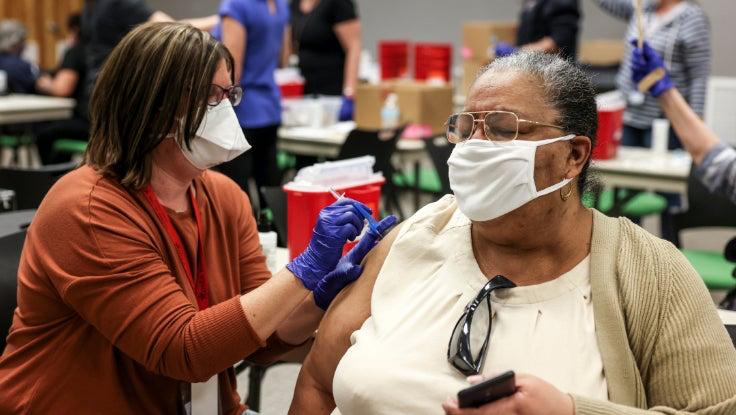
Additionally, the vaccines are rolled out in phases in nigh states: If you take been fully vaccinated but come into contact with someone who isn't, that could be unsafe for the unvaccinated person. Long story short, getting a vaccine doesn't hateful you're completely immune to contracting (or spreading) COVID-19. However, widespread vaccination will help build herd amnesty — a state at which enough people are immune to the virus that spreading the pathogen from person to person becomes less mutual.
Despite the great strides that are being fabricated in areas that are excelling in vaccination rates, experts accept expressed concerns over the Delta variant; while vaccines seem to provide protection from information technology, the variant has also been linked to new outbreaks. Currently, at that place seems to be a dissever over how to approach concerns surrounding the Delta variant.
Should People Who Have Had COVID-nineteen Still Get Vaccinated?
A resounding "Yes" from the CDC and other healthcare experts on this one. Re-infection is possible, so if the vaccine is offered to you, regardless of whether you lot've already had COVID-19, you should get vaccinated. It's even so unclear how long immunity lasts and, in general, the length of a person'southward natural amnesty can vary profoundly.
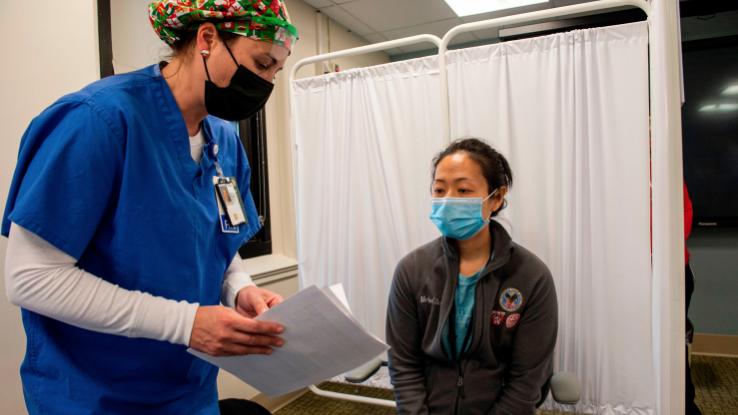
Currently, the CDC is providing recommendations to federal, state and local governments as to which groups of people should be vaccinated outset. If you're role of 1 of those early-phase groups, vaccination is important regardless of your history with COVID-19, and health officials recommend the extra safe precaution. "Both natural immunity and vaccine-induced immunity are important aspects of COVID-19 that experts are trying to learn more than about," the CDC has stated. "And [nosotros] will go along the public informed as new evidence becomes available."
DOWNLOAD HERE
Posted by: mayersshoustor.blogspot.com


0 Comments